- 01Phase 1: Crisis Management & System Re-Design
Auditing a Fragmented Legacy System and Mapping a New Vision
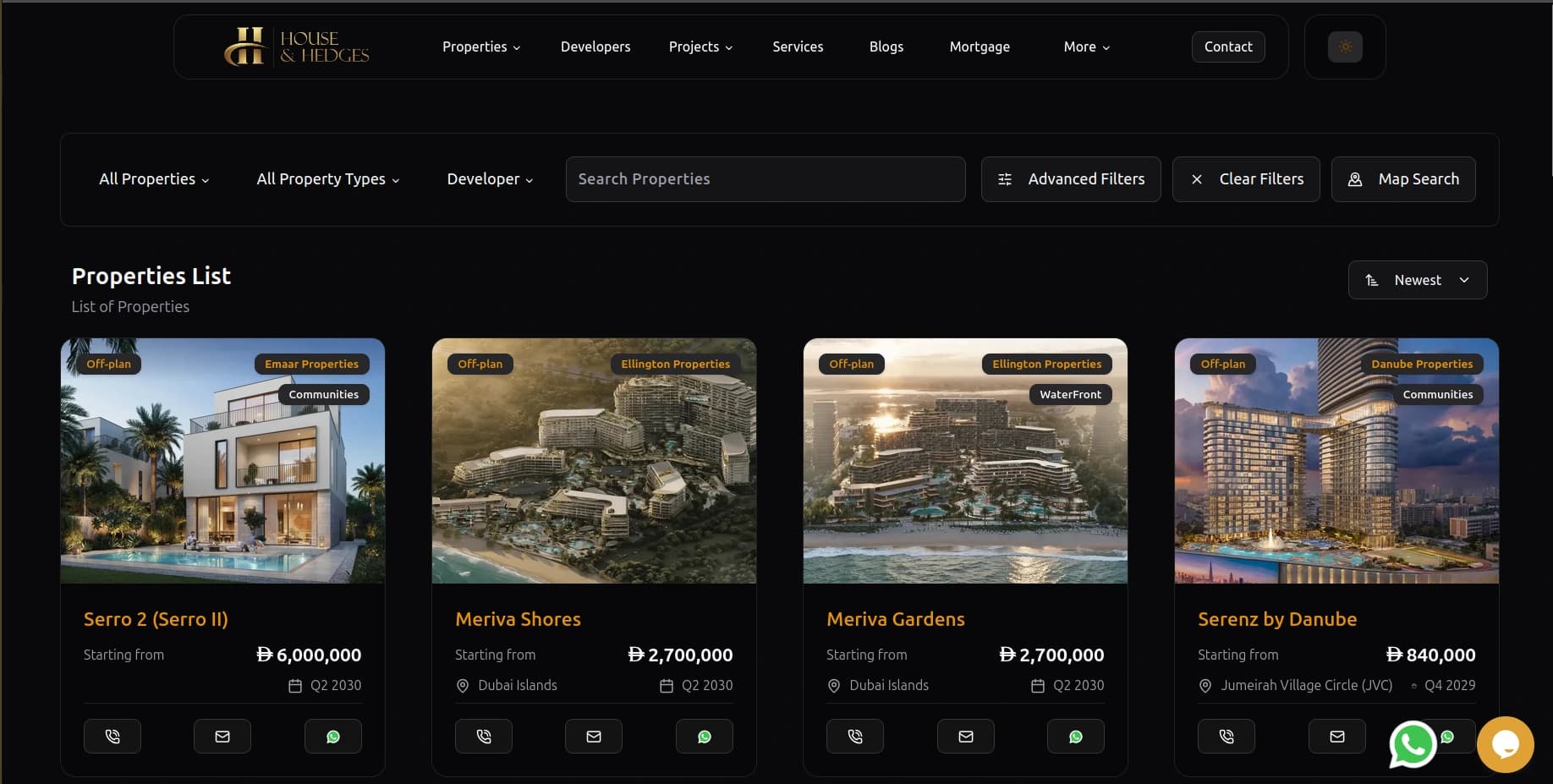
Upon joining the company, I inherited an unfinished, unoptimized, and non-responsive legacy website that bottlenecked daily business operations and required extensive manual data management. I took immediate ownership, reverse-engineering the useful bits of the old architecture and combining them with AI-assisted modern layouts to design a seamless, mobile-first real estate portal from scratch.
- 02Phase 2: Dual-Track Development Challenge
Building a Full-Stack Infrastructure While Running Corporate IT Operations
I engineered the initial custom full-stack system using React, Node.js, Prisma, and PostgreSQL. Development required high discipline: because I was the sole technical anchor, I had to build this entire platform while simultaneously keeping the failing legacy site alive, listing daily property inventories, managing corporate email configurations, and troubleshooting company-wide hardware, network, and printer issues. Despite the heavy dual workload, the core platform, secure JWT authentication system, and administrative dashboard were built and polished in just two and a half months.
- 03Phase 3: Data Migration & Production Launch
Migrating Content Inventories and Automating Deployment Pipelines
With the core application built, I focused on data integrity. I wrote custom scripts to safely extract, clean, and migrate existing high-value off-plan projects, property listings, and articles from the old database into our structured PostgreSQL database. To ensure stable production lifecycles, I containerized the services with Docker and set up automated GitHub Actions CI/CD pipelines to deploy updates directly to a self-hosted VPS.
- 04Phase 4: The SEO Pivot & Next.js Migration
Re-Architecting to Next.js for Native Server-Side Rendering and Business Growth
While the initial React SPA architecture delivered beautiful performance and fluid UI interactions, it struggled significantly with client-side rendering indexing limitations, causing our pages to lag behind competitors in Google search rankings. Operating under a strict zero-budget constraint for premium rendering services, I made the strategic choice to re-architect the entire frontend using Next.js. Embracing Native Server-Side Rendering (SSR) allowed search engines to instantly crawl fully rendered page templates, bringing our technical SEO to peak health, unlocking higher organic keyword rankings, and driving a massive surge in client lead generation.
Case study
Enterprise Real Estate Platform & Search Engine
A complete architectural overhaul migrating a fragmented, broken legacy platform into a high-throughput, search-optimized custom application that directly boosted company lead generation.
4 phases11 technologies